The contract behind the chip
Every lender financing the AI buildout has to put a price on something that remains contested. What is a graphics processor worth in year three, with two years still to run on the loan? Liquidity now lends against contracted compute, which made that the first question we had to answer.
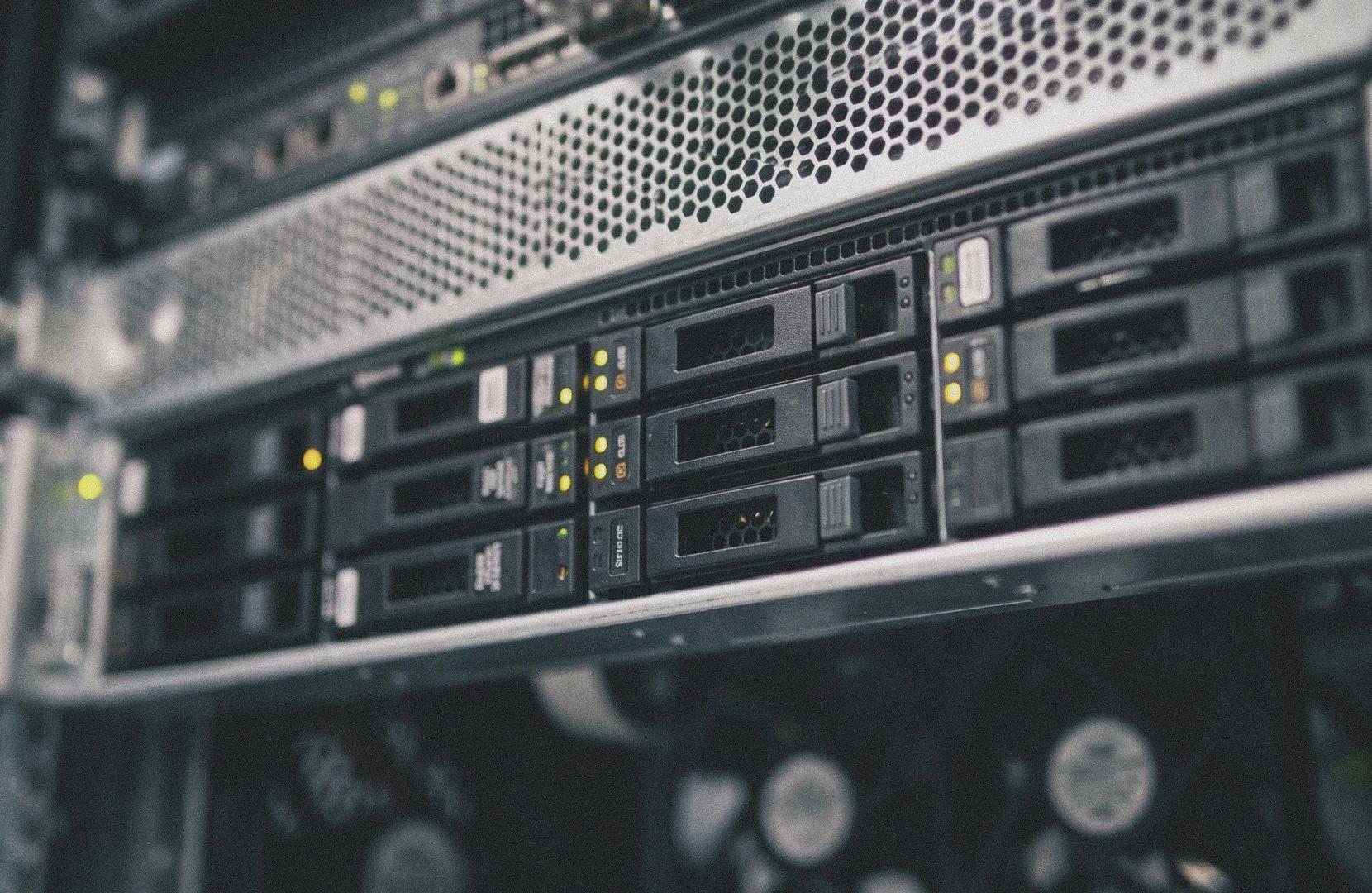
Every lender financing the AI buildout has to put a price on something that remains contested. What is a graphics processor worth in year three, with two years still to run on the loan? Asset-backed financing has an established formula, built on assets like aircraft and factory machinery that lose value slowly enough for a lender to sell them and get most of its money back. Chips come with a few years of trading history and a great deal of argument. Liquidity now lends against contracted compute, which made that the first question we had to answer.
A contested asset
The disagreement runs through the accounts of the companies that own the most of them. Both changes took effect on 1 January 2025: Amazon cut the assumed working life of some of its servers and networking hardware from six years to five, adding about $1.4 billion to its depreciation charge for the year, while Meta extended most of its own servers and network assets to five and a half years and took $2.92 billion out of its charge. Two of the largest buyers of the same hardware read the same question and moved in opposite directions.
The operating evidence argues against the pessimistic case. CoreWeave told investors in August that A100 chips launched in 2020 were still earning, with some contracts running to 2029 and Nvidia used its autumn investor presentation to argue that an A100 holds roughly a quarter of its original price after six years. Rental income and resale value answer different questions - a lender that has to recover its money from the hardware is asking the second one.
Pricing it right
While the argument continues, the market has settled it in practice by pricing the customer rather than the chip. Indicative terms published by American Compute run at 7 to 10% a year where the company buying the compute is investment grade, 10 to 12% where it is a strong corporate and 12 to 15% where the contract is weak or unsigned, against hardware that may be identical in all three cases. The same logic holds at the top of the market, where CoreWeave's $8.5 billion facility in March 2026 became the first chip-backed financing to carry an investment grade rating, secured on the hardware and carried by contracted revenue from a few creditworthy customers.
The middle rung
Sorting by customer quality has left the borrowing market sorted by size. American Compute counted 536 compute operators this year, of which the largest can access rated term loans, the smallest work with equity, leases and supplier credit and roughly 174 sit in between with 11 to 200 staff each, borrowing on terms priced deal by deal with no published benchmark to anchor the negotiations. Those companies tend to have a signed contract and a working GPU cluster and run into a sequencing problem, because the customer wants to see the hardware installed before committing to a long agreement while the lender wants the agreement before funding the hardware. Morgan Stanley expects private credit to cover around $800 billion of the roughly $1.5 trillion that data centre investment needs from outside the companies doing the building and we’re seeing most of that money moving towards deals large enough to be rated.
Structure, matched
The solution to the sequencing problem lies in how the deal is structured, rather than a bet on residual values. A contract-backed financing ring-fences the deal: the hardware and the customer agreement sit in a new company created just for that purpose, so the lender is exposed to that contract rather than to the operator’s wider business.The lender buys the hardware from the vendor and holds title until repayment, the customer pays into an account pledged to the lender, instalments run across the life of the contract rather than the assumed life of the chip and a few months of payments sit in reserve. Ownership passes to the operator once the debt is repaid, which leaves the resale value of the hardware as a last line of defence instead of the basis of the loan.
This is the gap Liquidity has moved into. We deploy upwards of $100 million against contracted compute, structured so that repayment tracks the customer contract rather than the depreciation schedule. We have already built hardware financing on that basis for a server operator supplying capacity to a global hyperscaler. Our platform scores both the operator and its customer, and reassesses them throughout the life of the facility rather than only at closing, because the customer’s credit matters as much as the borrower’s.
Compute lending is being underwritten as contract risk with hardware behind it and the hardware is the part everyone is still arguing about. Chips will keep losing value on a curve nobody agrees on. The operators that can show a creditworthy customer, a clean payment route and an agreement that outlasts their loan will keep raising money on terms the rest of the market cannot match.
Latest news


November 2026
The contract behind the chip
Every lender financing the AI buildout has to put a price on something that remains contested. What is a graphics processor worth in year three, with two years still to run on the loan? Liquidity now lends against contracted compute, which made that the first question we had to answer.